
We've worked with enough founders and marketing teams to know that the same blind spots show up again and again. So we mapped them. All twelve of them. This isn't a list of things you should theoretically do. It's a diagnostic. Read through it and count how many you're actually doing — not dabbling in, but doing properly. The number might surprise you.
01. Paid Media & Media Buying
The most direct lever in growth. You put money in, customers come out. But most businesses running paid media are doing one of three things wrong: targeting too broadly, optimising for the wrong metric, or letting creatives go stale.
Paid media isn't a channel you set up and monitor. It's a system you continuously improve. The brands winning on Meta, Google, and TikTok in 2026 are testing creative constantly, segmenting audiences with surgical precision, and making decisions based on contribution margin — not ROAS alone.
If your paid media feels like it's plateaued, it probably has. The ceiling isn't the channel. It's the approach.
What you're leaving on the table: Profitable scale. The business that's outspending you isn't smarter — they're more systematic.
02. Creatives & Content Marketing
Performance without creative is dead. This is the most important shift in paid media over the last three years, and most brands still haven't caught up.
The creative — the video, the image, the copy, the hook — is now the primary targeting mechanism. Algorithms find the audience. Your job is to give them something worth finding.
Content marketing compounds in a way that paid media doesn't. An article that ranks in month three keeps generating leads in month thirty-six. A video series that builds an audience keeps converting long after the campaign budget runs out. Creatives and content aren't the soft side of marketing — they're the infrastructure.
What you're leaving on the table: Organic leverage. Every month without a content strategy is a month of compounding growth you'll never get back.
03. Social & Community Growth
Follower counts are vanity. Community is a moat.
The brands that are genuinely winning on social in 2026 aren't broadcasting — they're building. They have audiences that reply, share, and buy without being asked. That level of engagement doesn't come from posting schedules. It comes from a clear point of view, consistent presence, and the willingness to say something that not everyone agrees with.
Community growth is slow to start and exponential to maintain. The businesses that planted those seeds two years ago are harvesting them now. The businesses that haven't started yet are already behind — but not so far that it can't be fixed.
What you're leaving on the table: Owned audience. An email list or community you own outperforms any rented platform when algorithms change — and they always change.
04. E-commerce & CRO
Your website is either your best salesperson or your most expensive brochure. The difference is conversion rate optimisation.
The average e-commerce store converts between 1% and 3% of its traffic. The top performers convert 5% or more. That gap — across the same traffic, the same ad spend, the same product — is pure revenue left on the table.
CRO isn't about making things prettier. It's about removing friction. Faster load times, clearer product pages, better checkout flows, smarter upsells. Every percentage point of conversion improvement is a multiplier on everything else you're doing.
What you're leaving on the table: Revenue from traffic you're already paying for. The highest ROI move in most e-commerce businesses isn't more ads — it's fixing what happens after the click.
05. Marketplaces & PPC
Amazon, Google Shopping, eBay, Etsy — marketplaces are where purchase intent lives. People arrive already knowing they want to buy something. Your job is to be the answer when they search.
Most brands treat marketplace presence as an afterthought. They list products without optimising them, run PPC campaigns without proper keyword strategy, and ignore the review velocity that determines organic ranking. Meanwhile, competitors who understand the marketplace algorithm are taking the traffic that should be theirs.
Marketplace growth requires a different skillset from DTC growth. The rules are different, the levers are different, and the margin economics are different. Done properly, it's one of the most efficient channels available.
What you're leaving on the table: High-intent traffic from buyers who are already in purchase mode. No brand awareness required — just the right product, in the right place, at the right price.
06. Web Platforms & Design
Your website is your most visited salesperson — and unlike a human one, it works 24 hours a day, across every time zone, without a salary.
Most business websites fail at the basic job: converting a curious visitor into a paying customer. They're built to look good in a pitch deck rather than to move someone through a decision. Navigation that confuses. Copy that explains instead of persuades. CTAs that appear too late or too often.
A well-built web platform isn't just a design project. It's a growth infrastructure decision. Speed, structure, messaging hierarchy, mobile experience — each one affects conversion, SEO, and the impression you leave on every person who finds you.
What you're leaving on the table: First impressions you only get once. A prospect who lands on a slow, confusing website doesn't ask questions — they leave.
07. AI Integration & Automation
The gap between businesses using AI properly and businesses that added a chatbot to their website is widening every month.
Proper AI integration isn't a product feature. It's an operational shift. It's the difference between a sales team that manually qualifies 50 leads a week and one that has an AI system qualifying 500, scoring them, and routing the best ones to humans. It's the difference between a marketing team that writes one email a day and one that tests ten variations simultaneously.
We've seen businesses cut proposal turnaround time by two-thirds using AI-assisted systems. We've seen lead response time drop from 48 hours to under 4 minutes. These aren't marginal improvements — they're structural advantages that compound.
What you're leaving on the table: Time, scale, and competitive distance. Every month without a proper AI system is a month your competitors are using that time to get further ahead.
08. Strategy & Growth Consulting
Most businesses are executing tactics without a strategy. They're running ads because everyone runs ads. They're posting on social because everyone posts on social. They're doing things without knowing why those things specifically, at this scale, for this audience, in this market.
Strategy isn't a document. It's a set of choices about where to focus and where not to. It's knowing which channel to double down on because the unit economics work, and which one to pause because the data says stop. It's having someone in the room whose job is to see the whole picture while everyone else is heads-down in execution.
The businesses that grow fastest aren't the ones doing the most things. They're the ones doing the right things in the right order.
What you're leaving on the table: Clarity. And the compounding returns that come from being focused instead of spread thin.
09. Software & Apps Development
Some problems can't be solved with off-the-shelf tools. And most businesses hit that ceiling earlier than they expect.
The CRM that doesn't integrate with the warehouse. The reporting tool that can't pull from three different ad platforms. The onboarding flow that requires five manual steps because no one has built the automation yet. Each of these is a tax on your team's time — and a ceiling on your scale.
Custom software isn't just for enterprise. A well-scoped internal tool or customer-facing application can remove an entire category of operational friction. The question isn't whether you can afford to build it. It's whether you can afford not to.
What you're leaving on the table: Scalability. The systems that got you to this revenue level are often the thing preventing you from reaching the next one.
10. Venture Studio
This one is different from the rest. It's not a service you buy — it's a model you enter.
A venture studio isn't an agency that helps you grow something you already have. It's a partner that helps you build something new — and in some cases, invests alongside you to do it. The right studio brings brand-building, market strategy, product development, and operational infrastructure to a new venture, reducing the time and capital required to reach market.
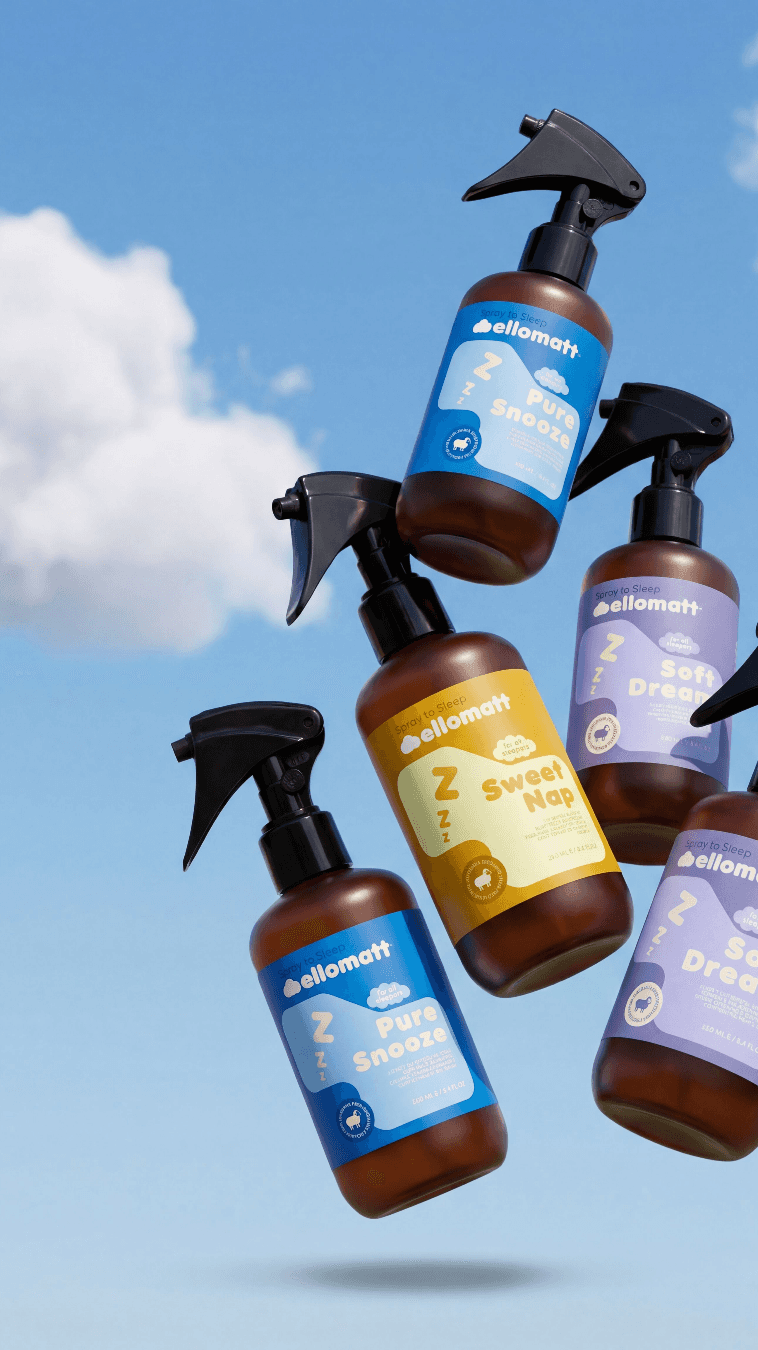
We built Ellomatt — a DTC sleep brand — from zero to a 22-product European market entry using exactly this model. Not as a client project. As a venture we believed in enough to build ourselves.
The businesses that are going to define the next decade aren't just optimising existing models. They're building new ones.
What you're leaving on the table: The new thing. The brand, product, or market you keep thinking about but haven't had the right partner to build with.
11. PR & Influencing
Earned media and influential voices still move markets in ways that paid media can't replicate. The difference between a brand that people discover and a brand that people trust is often a third-party voice saying "this is worth your attention."
But PR in 2026 looks different from PR in 2016. It's not just press releases and journalist relationships. It's strategic placement with the right creators, the right publications, and the right moments. It's knowing that a single piece of coverage in the right outlet can do more for brand credibility than six months of social posting.
The brands that consistently show up in earned media aren't the ones with the biggest budgets. They're the ones with the most interesting stories and the right relationships to tell them.
What you're leaving on the table: Trust. And the shortcut to credibility that no amount of paid media can fully replace.
12. Email Marketing & Lead Automation
The oldest digital channel is still the highest-ROI one. Not because email is exciting — it isn't — but because it's the only channel where you own the relationship entirely.
No algorithm. No platform risk. No reach throttling. When someone gives you their email address, you have a direct line to them for as long as they choose to stay.
The businesses doing email properly in 2026 aren't sending newsletters. They're running automated sequences that nurture leads based on behaviour, re-engage dormant customers based on purchase history, and move people through a funnel without anyone manually doing anything. They're using lead automation to respond to enquiries in minutes, score prospects by intent, and route the right leads to the right people at the right time.
Email and lead automation combined is the closest thing to a guaranteed revenue channel that exists in digital marketing. Most businesses use 10% of its potential.
What you're leaving on the table: Revenue from people who already know you. The hardest part of any sale is getting attention — email gives you attention you already earned.
The Honest Audit
Go back through that list. Be honest.
How many of those twelve are you doing with genuine strategy and proper execution? Not dabbling. Not "we post sometimes." Actually doing.
Most businesses we talk to are doing three or four well, two or three poorly, and ignoring the rest entirely. That's not a criticism — it's a resource reality. You can't do everything at once. But you can do the right things in the right order, with the right partner.
That's what The Blank Works is built for. Not to take over your marketing. To identify where the growth is being left on the table and build the systems to capture it — across whichever of these twelve channels moves the needle most for your specific business.
Twelve channels. One team. Zero gaps.

Let’s keep in touch.
Discover more about high-performance web design. Follow us on Twitter and Instagram.




